Book Free Diagnostic
Ecommerce Performance Marketing Agency
Ecommerce Performance Marketing Agency
Same products, similar ads, similar monthly spend. The difference was how the account was organized underneath.
At 4.79× the account looked healthy, but it had never had a structural audit.
A six-week rebuild:
6.05×blended ROAS
Jan 2025–May 2026 (17 months)
AU$755K attributed revenue on AU$124.8K of ad spend.
Comparison4.79× blended ROAS in full-year 2024 (AU$409K on AU$85.5K).
ContextThe periods differ in length and season, so this is a documented comparison, not a controlled test. Average monthly spend was similar: about AU$7.1K, then AU$7.3K.
Google Ads performance from the previous 2024 period compared with the subsequent 17-month MESAscale management period. The reporting periods differ in length and are shown exactly as recorded.
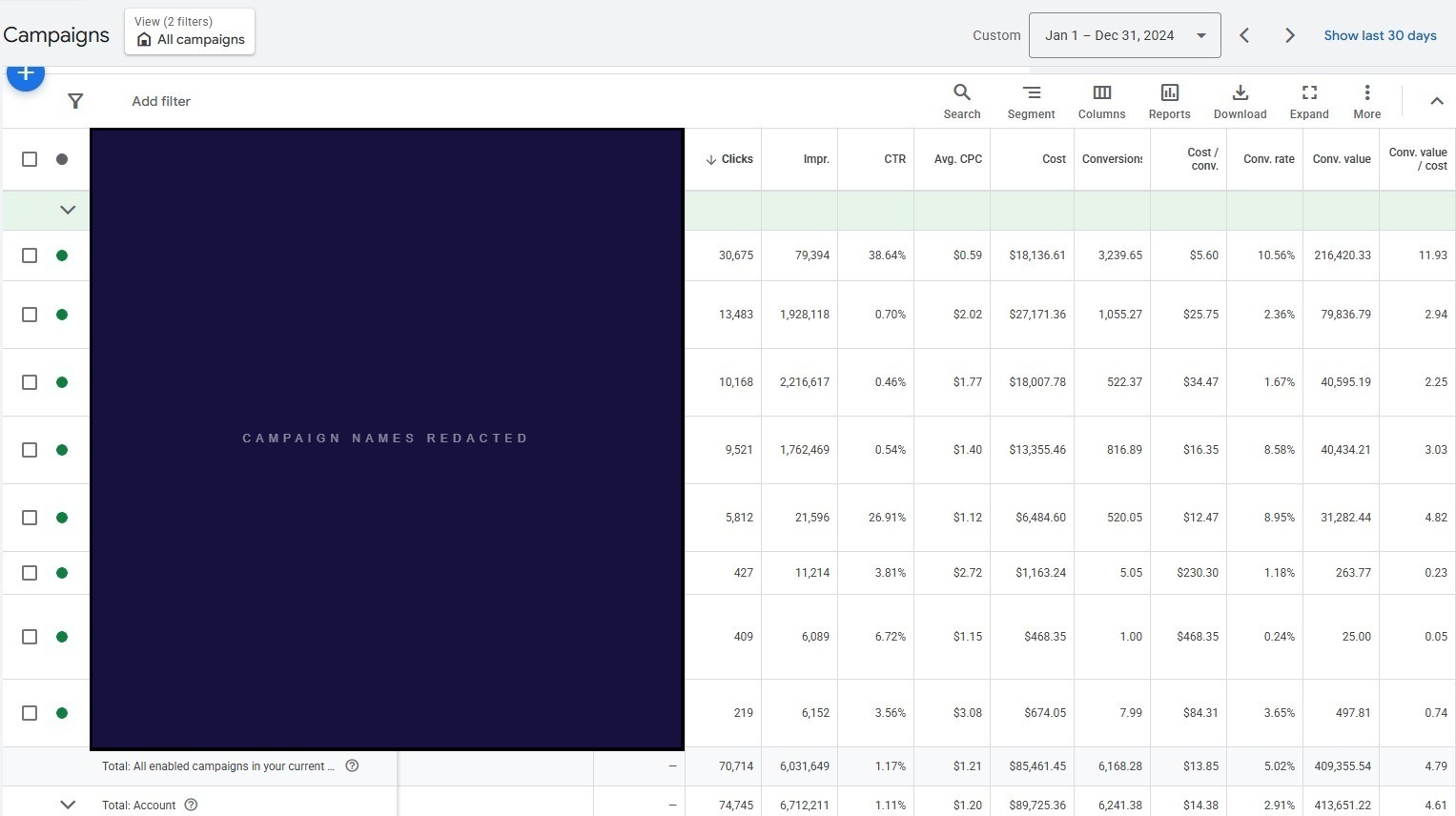
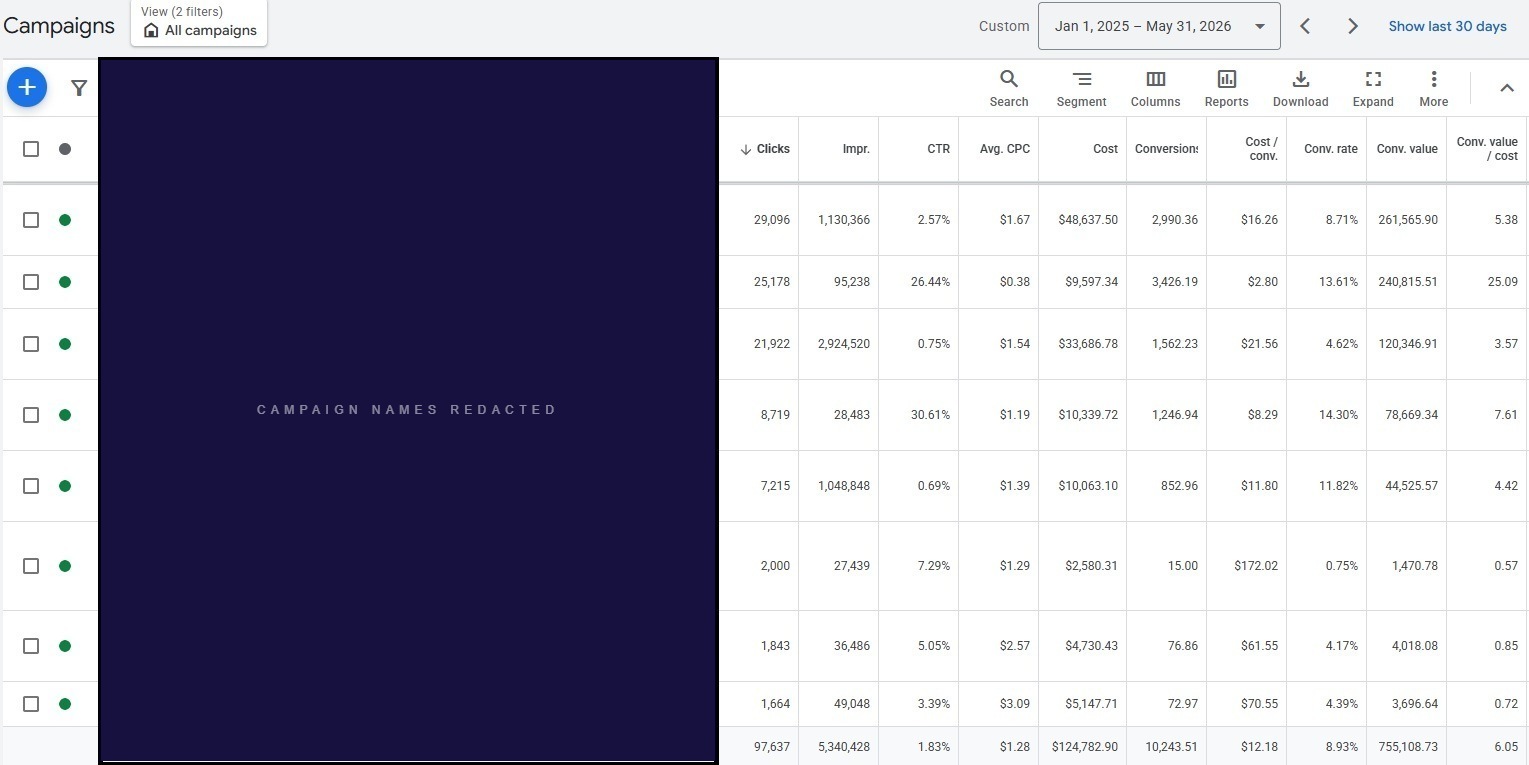
Campaign names withheld under client NDA. Performance data documented from the client’s Google Ads account. All figures in Australian dollars (AU$). The two periods span different calendar years and seasonal cycles (2024 full year vs. January 2025–May 2026); they are shown exactly as recorded and should not be treated as a controlled comparison.
The 4.79× in 2024 looked reasonable on the surface. Managed largely in-house with occasional freelancer support, the account had never had a structural audit. The first week surfaced four issues: product titles inherited from the original Shopify build, no first-party purchaser data feeding Performance Max, broad Search covering a wide mix of generic and informational queries, and overlapping campaign responsibilities.
The feed titles were built from the original Shopify launch and never revised. They used collection names that were internal references, not the terms buyers actually type: material, cut, fit. Impression share on product-specific queries was low.
Campaign responsibilities had become difficult to govern
Several ad groups and campaigns covered closely related product themes. Query routing, budget interpretation, and performance ownership had grown murkier as structure accumulated over time. Not literal auction self-competition. Unclear ownership.
Broad match was diluting Search budget
Broad match was pulling in generic fashion searches, editorial queries, and informational lookups alongside higher-intent product demand. Those searches consumed budget without converting and made it harder to concentrate spend on the terms closest to purchase intent.
Purchaser data wasn’t feeding Performance Max
Performance Max was running without the brand’s verified purchase history as a Customer Match signal. The account’s strongest first-party asset hadn’t been uploaded.
Product titles used internal collection names, not buyer search terms
Feed titles hadn’t been touched since launch. They reflected internal collection naming rather than product attributes shoppers search: material, cut, fit, color. Impression share on high-intent queries was low.
If ROAS has been flat for several quarters, more optimization inside the same structure won’t move it. Sometimes the account needs a rebuild, not another round of adjustments.
The Growth Diagnostic is designed to identify exactly those kinds of constraints →If you recognized your account in those findings, a diagnostic session surfaces the same structural gaps and gives you a prioritized plan to address them.
Week one: campaign responsibilities, Search query quality, product-feed structure, audience signals, and account-level exclusions. Work was sequenced by likely impact: feed language and audience signals first, Search match-type cleanup second, campaign consolidation third.
We consolidated overlapping structures and organized around three campaign types: Brand Search, Shopping, and Performance Max. Negative-keyword controls, campaign settings, and query governance established clear ownership across each. DSA campaigns and broad-match groups without conversion evidence were paused.
We reviewed 90 days of search-term data. High-intent terms were moved into deliberate exact and phrase match. Editorial searches, informational lookups, and wholesale queries were excluded where conversion data supported it.
We uploaded the brand’s verified purchase history via Customer Match, giving Performance Max a direct first-party reference from real buyers rather than inferring audience from site visits alone.
We rewrote feed titles for the top revenue-driving SKUs to lead with what buyers search: gender, product type, material, color, fit. “Women’s Linen Wide-Leg Trousers · Beige · Relaxed Fit” instead of “Coastal Edit Relaxed Trouser.” Visibility on those targeted queries improved within the first reporting window.
A 4.79× account and a 6.05× account can look identical from the outside. Same products, similar ads. The difference is underneath: how customer data, product feeds, Search queries, and campaign responsibilities are organized. Here, the structural work happened in the first six weeks and held for 17 months.
The 6.05× reflects the complete 17-month management period, not a selected window. The prior 2024 period ran 4.79×. That’s a 26% relative difference across two documented periods of different length and different seasonal cycles. All figures in AU$.
Clearer campaign roles, stronger product data, tighter Search controls, purchaser data in Performance Max. That architecture held for 17 months without requiring another rebuild. The structural work was front-loaded. What followed was ongoing governance, not repeated reinvention.
All performance data sourced directly from the client’s Google Ads account. Platform-attributed revenue. Reporting periods differ in length.Share a few details about your brand and advertising. We’ll identify opportunities to improve performance and drive more profitable growth.
Kelvin reads every enquiry and will reply by email. If it’s urgent, call 416.783.1157.